One in every five pediatric heart transplants performed in Brazil in 2025 was carried out at Pequeno Príncipe
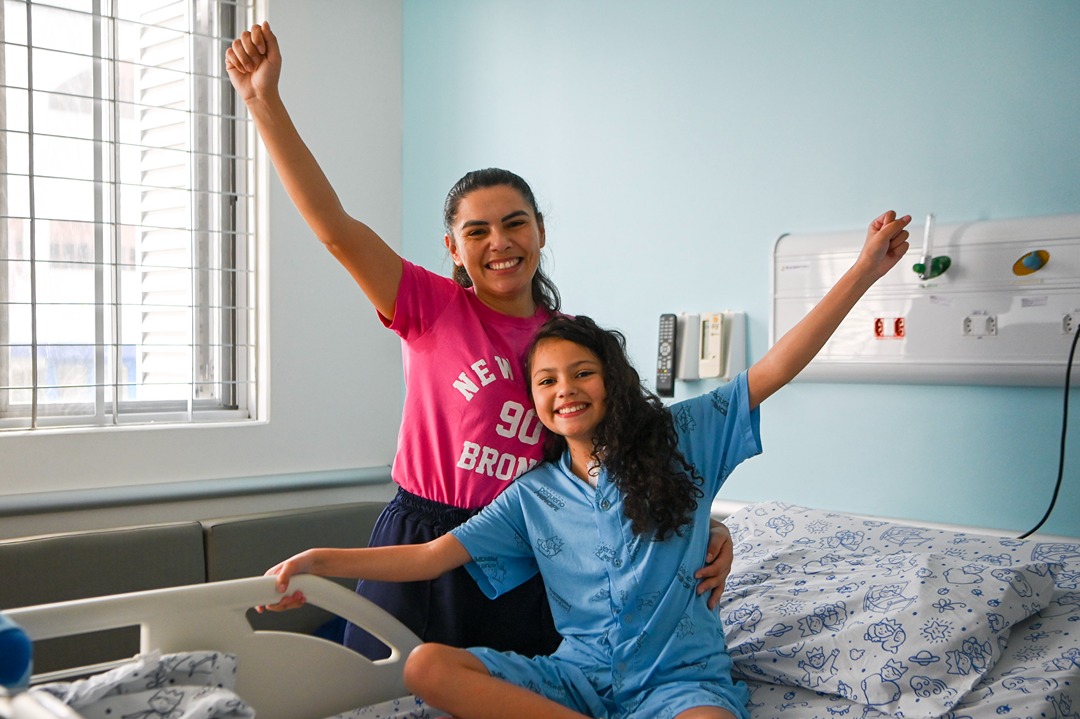
When she learned that a compatible heart had been found, Mariah Cruz dos Santos did not think about the risks of surgery or the long road that had brought her to that moment. The young girl from Lages, state of Santa Catarina, picked up the phone and called her family to tell them she was about to receive a new heart.
For her parents, the news brought a mixture of fear and hope. After enduring surgeries, hospital stays, and the unexpected diagnosis of dilated cardiomyopathy, the family arrived at Pequeno Príncipe Hospital seeking the only alternative capable of changing their daughter’s future: a heart transplant.
“My little girl is a transplant recipient, and her heart is new, healthy, and strong. Now Mariah will be able to play, run, and swim — things she couldn’t do before. It was a mixture of hope and relief,” recalls her mother, Rubia Cruz dos Santos.
Stories like Mariah’s help explain a milestone achieved by Pequeno Príncipe Hospital in 2025. A national reference in pediatric cardiology, the institution performed 12 heart transplants throughout the year — the highest annual volume in its history and the equivalent of approximately 20% of all pediatric heart transplants performed in Brazil during the period.
This achievement came just months after another historic milestone: the institution’s 50th heart transplant. Learn more details in the main article of the 2026 June edition of Pequeno Príncipe News.
In this newsletter edition, you will also check the articles below. Click on the links to read the full length texts.
- Donations funded 86% of the Hospital’s equipment investments in 2025. The funds were raised through companies, foundations, social investors, government agencies, legislators, the Judiciary, and various incentive mechanisms. This allowed the acquisition and renewal of the institution’s equipment, such as anesthesia machines for endoscopy procedures and ultrasound systems for specialties such as cardiology. Part of these investments was also directed toward essential support areas.
- Caring for people’s health also means caring for animals and the environment. This is the premise of One Health, a concept that recognizes that human, animal, and environmental health are interdependent and must be understood in an integrated way. At the Pequeno Príncipe Complex, this vision guides initiatives in healthcare, education, and research, fostering a systemic approach to care and contributing to a healthier and more sustainable future.